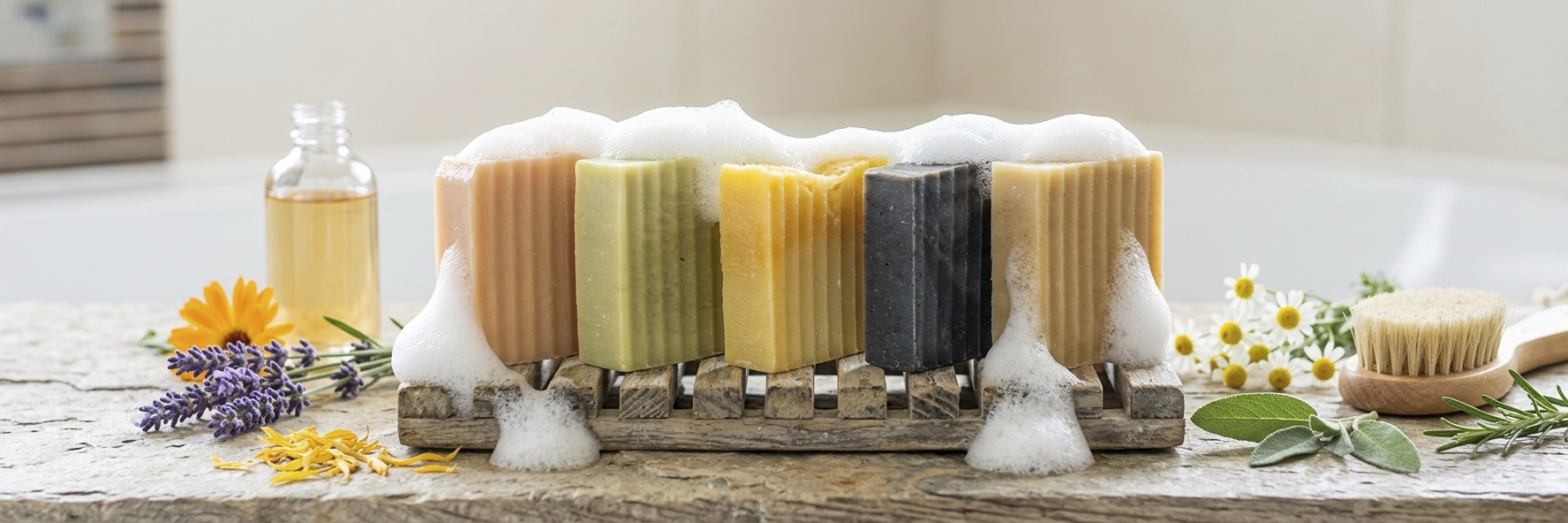
The Ultimate Guide to Natural Shampoo Bars: Benefits, Usage & Troubleshooting
Are you thinking about making the switch to a natural shampoo bar? Solid shampoo bars are specially formulated to cleanse your scalp gently without stripping away your hair’s essential moisture. By ditching liquid shampoo, you can achieve shinier, more volumized hair while dramatically reducing your environmental footprint.
Whether you are looking to define your natural curls, eliminate plastic packaging, or simplify your hair care routine, here is everything you need to know about switching to eco-friendly solid shampoo.
Why Switch to a Natural Shampoo Bar?
Transitioning from conventional bottled shampoo to a solid bar offers powerful benefits for both your hair health and the planet.
Benefits for Your Hair and Scalp
- Nourishing Ingredients: Enriched with botanical oils and plant-based butters, such as olive oil, coconut oil, castor oil, shea butter and cocoa butter, to help nourish hair and enhance softness and shine.
Sulfate-Free Cleansing: Free of harsh detergents like SLS (Sodium Lauryl Sulfate) and SLES (Sodium Laureth Sulfate) that strip hair of its natural moisture.
Retains Natural Glycerin: Commercial processes often remove hydrating glycerin, but natural bars retain their naturally occurring glycerine and nourishing oils help hydrate hair, leaving it feeling softer and smoother.
Restores Scalp Balance: Gentle cleansing helps maintain a comfortable, healthy-feeling scalp and can help reduce dryness and irritation.
Colour-Friendly Cleansing: Our gentle cleansing and SLS free shampoo helps preserve dyed hair, keeping your colour looking vibrant for longer.
Free from Artificial Colourings, Fragrances & Preservatives: Made without artificial colourants, fragrances or added preservatives, for a simpler, more natural haircare routine. By avoiding these ingredients, our shampoo bars may help reduce exposure to certain ingredients that can trigger scalp irritation or sensitivities in some people, leaving your scalp feeling comfortable and cared for.
Environmental & Lifestyle Benefits
Long-Lasting: A concentrated shampoo bar can last as long as two to three bottles of liquid shampoo, depending on hair length and usage.
Cruelty-Free & Sustainable: Made without palm oil or animal testing.
Zero-Waste & Plastic-Free: Completely eliminates the need for single-use plastic bottles.
100% Biodegradable: Formulated with natural, ethically sourced, and fair-trade ingredients that are safe for waterways.
Water-Saving Production: Solid bars require significantly less water to manufacture than standard liquid shampoos.
Travel-Friendly: Compact, lightweight, and completely leak-proof—making them perfect for hand luggage.
How to Use a Shampoo Bar Step-by-Step
Using a solid shampoo bar is simple, though it requires a slightly different approach than liquid shampoo.
Thoroughly Wet Hair: Ensure your scalp and hair are completely soaked with warm water.
Apply and Massage the Scalp: Rub the bar directly on your head or hair to create a rich lather. Because our shampoo bars do not contain SLS, it is safe to apply directly to your hair. Gently massage your scalp using your fingertips.
Rinse Thoroughly: Flush out all lather with clean water.
Condition or Rinse (Optional): Follow with an Apple Cider Vinegar (ACV) rinse to smooth the hair cuticle, boost shine and balance the hair pH.
Alternatively use one of our conditioner bars to nourish and detangle your hair.
How to Store Your Shampoo Bar so It Lasts Longer
Because natural shampoo bars contain no artificial preservatives or synthetic chemical hardeners, proper storage is essential to extend their lifespan.
Keep It Dry: Never leave your bar sitting in puddle of water. Use a well-drained soap dish so water can run off easily.
Allow Airflow: Ensure the bar is exposed to fresh air between uses to dry out completely.
Store Unused Bars Properly: Keep backup bars in a cool, dry, and dark location (such as a linen closet). Avoid storing them in airtight or sealed plastic containers for extended periods.
Troubleshooting the Transition Period ("Hair Detox")
If your hair feels sticky, oily, or dry after your first few uses, don't worry! This is a completely normal part of the transition phase.
If you have been using conventional detergent shampoos most of your life, synthetic chemicals may have left build-up on your hair and scalp. We won't promise that years of synthetic build-up will disappear overnight—restoring your hair’s natural balance takes a little time and consistency, but the results are well worth it!
Here is how to solve common transition issues:
1. The Scalp Detox Phase
Conventional shampoos use harsh sulfates that strip away natural oils and allow tiny detergent molecules to enter hair follicles, potentially weakening your hair roots. This can contribute to hair shedding or force your scalp to overproduce oil to compensate. When you switch to natural ingredients, your scalp needs time to rebalance its oil production.
During the first few weeks, your hair may feel slightly greasy or tangled as it adjusts. Be patient; your scalp’s natural pH will balance out, leaving you with stronger, healthier hair.
2. Product Build-Up Removal
Synthetic silicones and waxes from old styling products can cling to your hair shafts.
If your hair feels heavy, dull, or flaky, try a gentle Baking Soda Prewash on your scalp (recipe below).
This prewash deeply cleanses the hair shaft, helping to dissolve lingering residue and synthetic build-up.
3. Hard Water mineral Residue
Hard water minerals react with saponified natural oils in shampoo bars, leaving a waxy residue behind.
The Solution: Use an Apple Cider Vinegar (ACV) rinse after washing, install an inexpensive shower head filter, or pre-wet your hair using distilled water or a baking soda rinse before applying your bar.
4. Finding the Right Formula
Not all shampoo bars are created equal. If your hair feels weighed down, you may be using a bar rich in heavy butter meant for coarse hair. Try our discovery set with different formulas to find the one that suits your specific hair type.
Baking Soda Prewash Recipe
Ingredients:
- 2 tablespoons baking soda (use 1 tablespoon if you have dry hair)
- 1 litre of warm filtered or distilled water.
Application:
mixed the baking soda with the warm water and pour or spray the mixture evenly over your hair prior to using the shampoo bar for washing your hair to strip away lingering synthetic build-up.
Apple Cider Vinegar (ACV) Rinse
Ingredients:
- 1 part of ACV
- 3 or 4 parts of warm filtered or distilled water.
- Hair friendly Essential Oils (optional)
12 drops per liter of ACV Rinse
Application:
mix the apple cider vinegar with the warm water, add your selected essential oil, sweet orange and rosmary are our favorites.
Apply it to your hair after washing, leaving it on for a few minutes before rinsing thoroughly.